
When the first Wuthering Heights trailer dropped, the marketing team did something smart: they didn’t just share the full video and call it a day.
Instead, they parceled it out, creating multiple 5–10 second Instagram feed snippets, each one highlighting a distinct emotional beat (e.g., Catherine’s longing gaze, a moody moor landscape, a brief flash of tension).
By turning the trailer into modular pieces, they built a steady stream of social content that teases, provokes, and sustains audience interest for weeks.
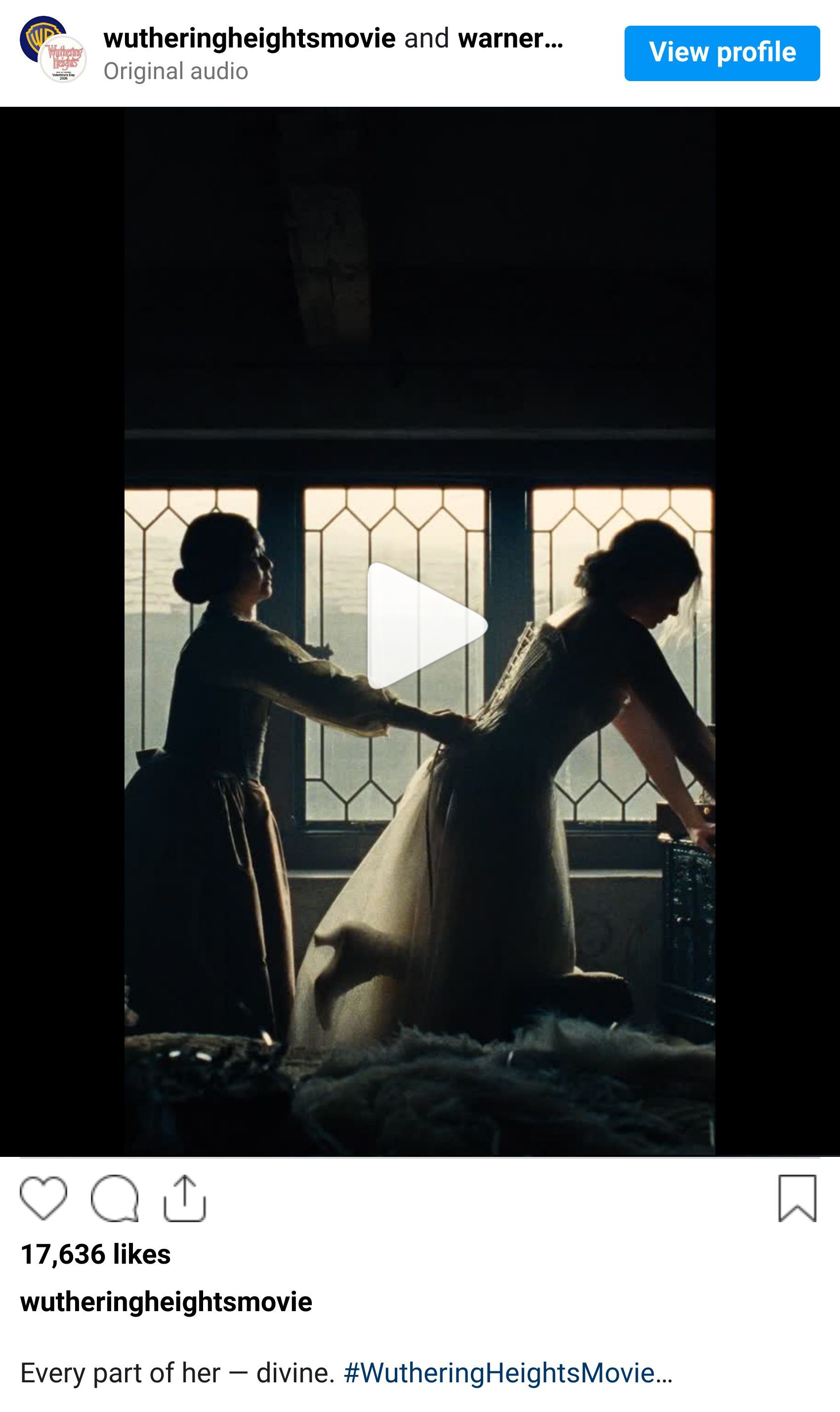
Why this content‑stretching strategy works
By slicing the trailer into smaller moments, Wuthering Heights’ team unlocks multiple advantages:
High engagement from bite-sized content: Instagram’s algorithm favors consistent, loopable short clips. Each snippet is powerful enough to spark comments, saves, and shares and every engagement boosts organic reach.
Broader audience targeting: Different snippets resonate with different people. The sensual, cinematic close-ups appeal to romance-first viewers, while atmospheric moor shots draw in gothic‑romance lovers.
Maximized return on production investment: Trailer production is costly. Turning every shot into several social-ready pieces multiplies the ROI on what was already created.
Adaptive marketing via performance data: By tracking which snippet styles (dark, romantic, dramatic) generate the most engagement, the team can lean into those formats for future content (posters, stills, more ads).
Data backs this up: a modern repurposing strategy can generate 300% more engagement compared to using content just once. And by reusing existing assets, teams can save 60% of their content production time.
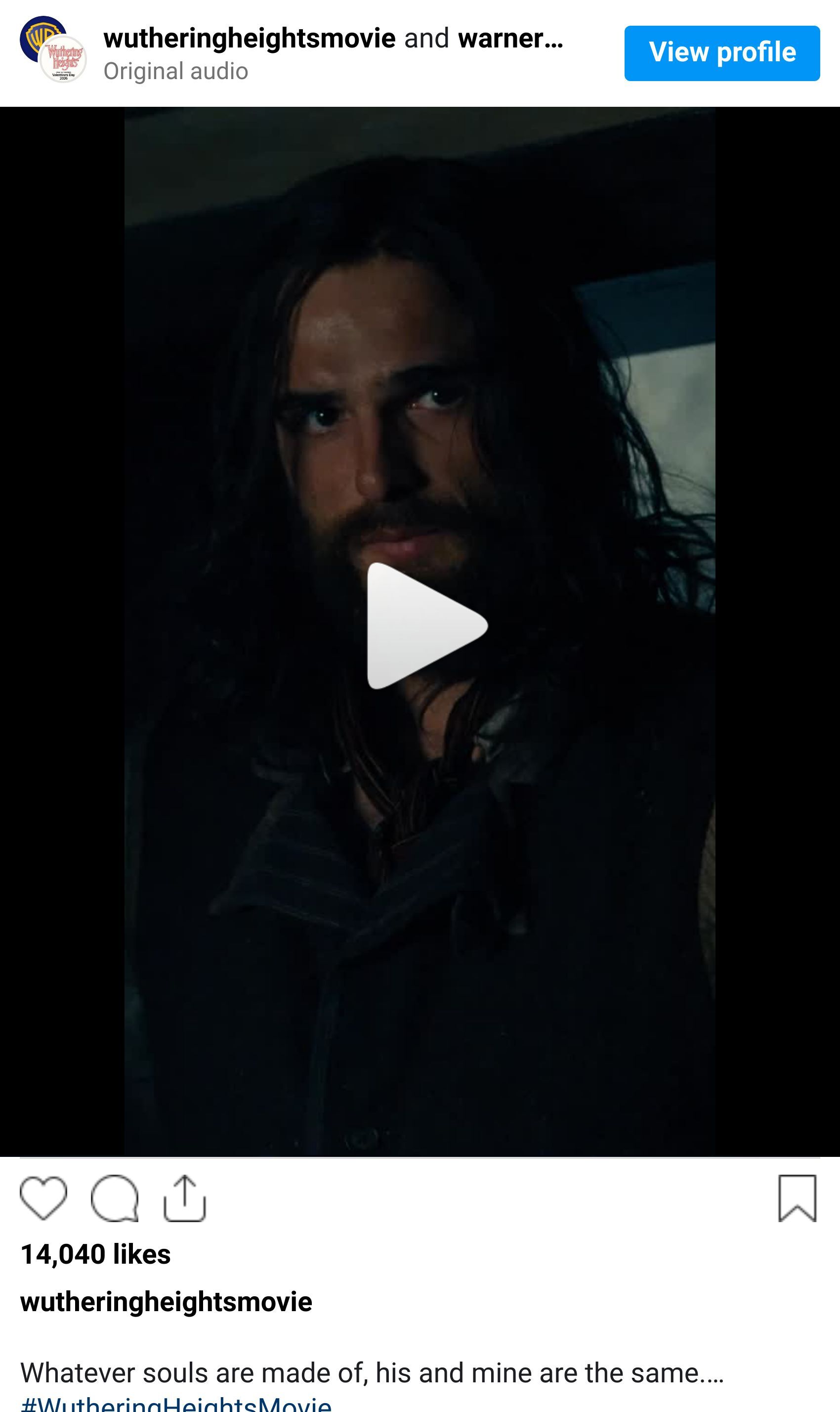
How often to reuse trailer content without fatiguing your audience
There’s a fine line between smart repurposing and over-repetition. Here’s how the Wuthering Heights campaign could (and seemingly does) walk that line well, backed by marketing best practices:
Aim for 5–8 meaningful adaptations per core piece of content (i.e. the original trailer)
Use the “20/80 rule”: spend 20% of your time creating new content, and 80% promoting + repurposing.
Space out repurposed posts. Do 2–4 posts a week from your repurposed pool keeps your feed active without overkill.
Watch engagement trends: resharing the same content can lead to a ~25% drop in engagement after the first run, so reuse smartly, not mindlessly.
Also, format matters: according to a recent study, Instagram carousel posts have an average engagement rate of 10.15%, outperforming feed Reels (which sat around 6.27% in that data set). That means when transforming trailer snippets, carousels or static clips can be especially powerful.
TLDR: How Wuthering Heights is playing the long game
By chopping up the trailer into short Instagram moments, the marketing team is telling a mini‑story, posting strategically, and building layered engagement.
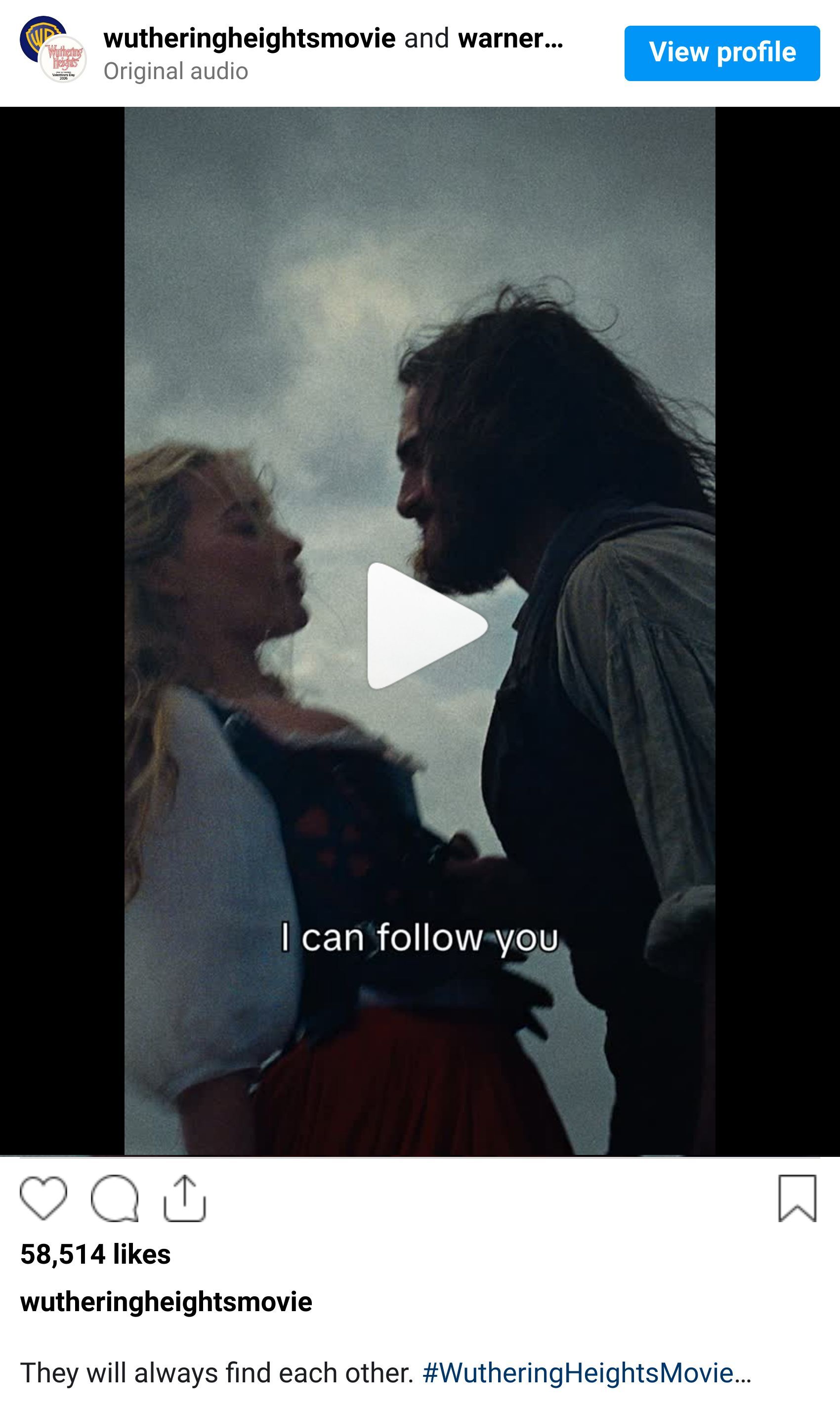
They maximize production value, sustain audience interest, and deeply test what resonates, all while conserving budget and creative resources. For film marketers, this is a reminder: your trailer isn’t just a one-off drop. It’s the foundation for weeks (or even months) of meaningful social content.
Movie marketing intel: This week in trends
STRATEGIC PARTNERSHIPS 🤝 Inside WB's marketing machine: the chiefs rewriting the movie playbook (The Ankler)
Warner Bros. co-heads of theatrical marketing, Dana Nussbaum and Christian Davin, are reimagining tentpole campaigns with bold out-of-home activations, AI-driven audience targeting, and social-first strategies. Their approach turns every ad placement into a potential cultural moment, leveraging stadiums, gas-station screens, and experiential stunts to maximize awareness and engagement in a crowded marketplace.
MARKETING STRATEGY 🎥 Inside Wicked: for good’s fan-driven, collaboration-heavy marketing for the sequel (Social Samosa)
The sequel Wicked: For Good prioritizes fan-first, immersive marketing over traditional broad-reach campaigns. With retail partnerships (Target, LEGO, Le Creuset), celebrity tie-ins (Ariana Grande), social content, and experiential moments like the “Elphaba Retreat” on Airbnb, Universal drives engagement, excitement, and word-of-mouth while staying efficient on a ~$90M campaign budget.
The Running Man — ★★½ (2.5/5)
A decent action flick that entertains in bursts but struggles with a predictable plot and uneven character development. Fans of fast-paced sequences may enjoy it, but it doesn’t quite stick the landing overall.
1
